Black Hat SEO Explained
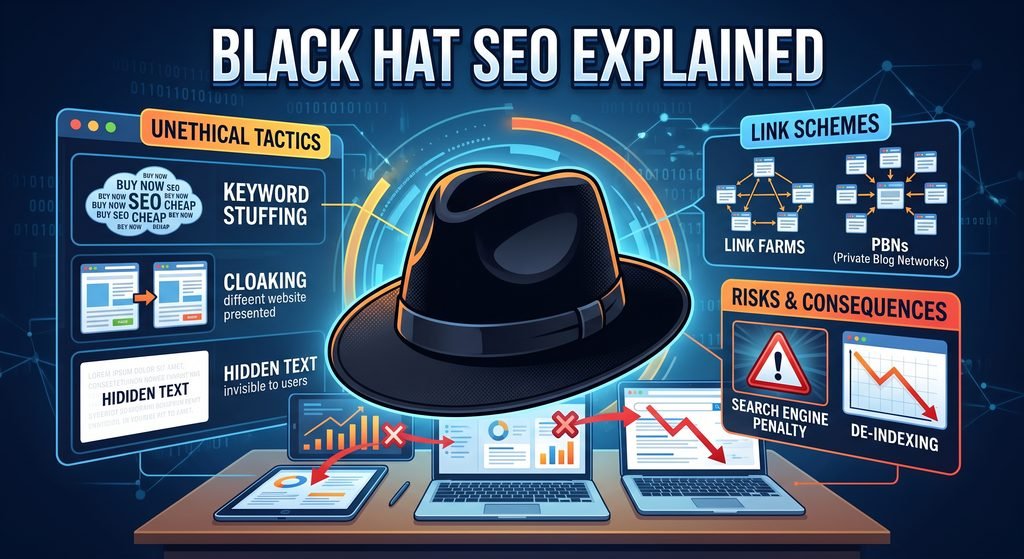
Search engine optimization is an industry defined by rules, but wherever there are rules, there are people looking for ways to break them. Black Hat SEO refers to a set of aggressive, manipulative practices used to artificially inflate a website’s ranking in search engines by intentionally violating their terms of service.
Rather than focusing on providing a genuinely helpful experience for human users, these techniques are engineered entirely to exploit the mathematical loopholes in search algorithms to achieve rapid, unearned visibility.
While search engines like Google continuously deploy complex machine learning models to detect and penalize these tactics, “Black Hat SEO” remains a rising query on Google Trends. Why? Because the modern digital economy is fiercely competitive, and the allure of fast, cheap, and massive traffic is a temptation many website owners, desperate affiliates, and aggressive marketers find impossible to resist.
Here is a comprehensive, 100% honest breakdown of what Black Hat SEO actually looks like today, why the underground economy around it continues to thrive, and the catastrophic risks that make it a dangerous game to play.
The Origins: Why Do We Call It “Black Hat”?
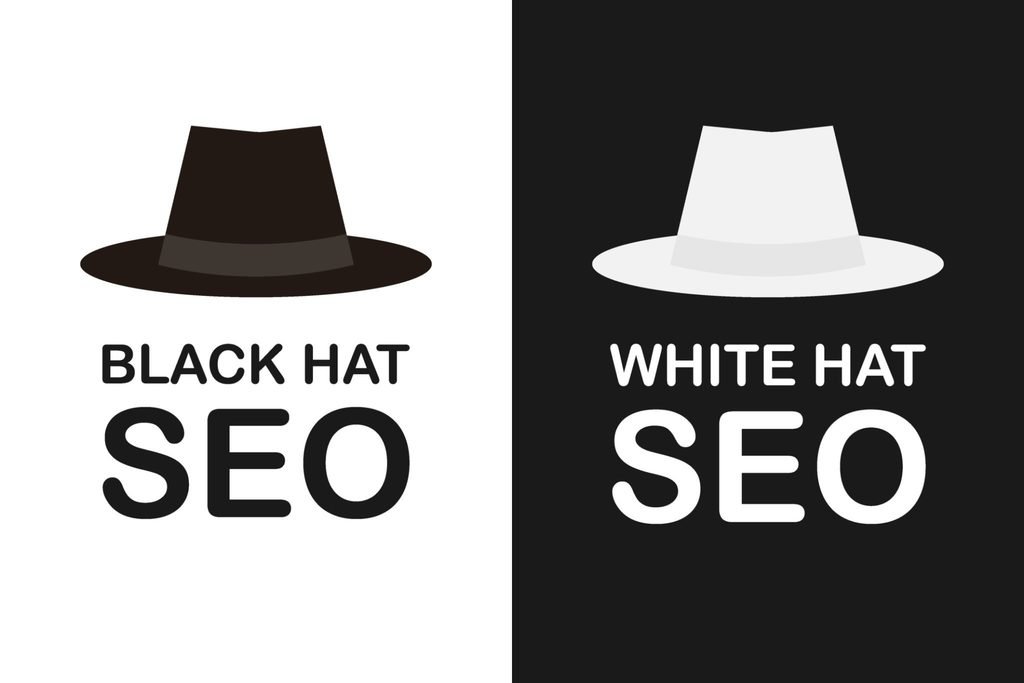
The terminology is borrowed directly from classic Hollywood Westerns, where the audience could easily distinguish the hero from the villain by the color of their cowboy hat. In the context of digital marketing, the hats represent your compliance with search engine guidelines:
- White Hat SEO: The hero. These are the rule-followers who build long-term, sustainable traffic by creating high-quality content, optimizing site speed, ensuring mobile-friendliness, and earning natural backlinks through genuine public relations and outreach.
- Black Hat SEO: The villain. These practitioners look for algorithmic exploits. They don’t care about the user’s experience; they only care about tricking the crawler bot into ranking their page number one.
- Gray Hat SEO: The anti-hero. This sits in the murky middle ground. Gray hatters might write great content but then buy a few expired domains to subtly pass authority to their site—tactics that aren’t purely malicious but still technically violate Google’s Webmaster Guidelines.
The Anatomy of Black Hat Techniques
If an SEO strategy feels manipulative, deceptive, or geared exclusively toward a bot rather than a human, it likely falls into the black hat category. Over the years, as Google has gotten smarter, the tactics have evolved from crude text manipulation to highly sophisticated network operations. Here is exactly how they work:
1. The Illusion of Authority: Link Schemes and PBNs
Search engines use backlinks (links from other websites pointing to yours) as a primary signal of trust and authority. If White Hat SEO is earning a genuine endorsement, Black Hat SEO is forging the signature.
- Private Blog Networks (PBNs): A practitioner will buy dozens or hundreds of expired domains that already have strong historical authority. They fill these domains with cheap content and link them all back to their primary “money site.” To the algorithm, it looks like a sudden surge of popularity.
- Link Buying and Link Farms: Instead of building a network, some will simply pay outright for thousands of links from “link farms”—websites that exist solely to sell placement to the highest bidder.
2. The Content Mill: AI-Washing, Scraping, and Spinning
Creating great content is expensive and time-consuming. Black hatters bypass this entirely.
- Mass AI Generation (The Modern Black Hat): With the rise of Generative AI, practitioners can spin up massive scripts that generate thousands of low-quality articles a day targeting hyper-specific long-tail keywords. They flood the index with “AI slop” hoping a fraction of those pages rank and capture ad revenue.
- Article Spinning and Scraping: Before AI, black hatters used software to scrape content from legitimate sites, swap out synonyms (e.g., changing “fast car” to “quick automobile”), and republish it as “original” content to avoid plagiarism filters.
3. The Bait and Switch: Cloaking and Sneaky Redirects
This involves showing one thing to the search engine to get the ranking, and something completely different to the user once they click.
- Cloaking: A website server is programmed to identify the IP address of a Google crawler bot. When the bot visits, it is served a beautifully optimized, text-heavy page. When a human clicks the same link, they are served a page full of aggressive affiliate ads, gambling links, or malware.
- Sneaky Redirects: A user clicks a search result for “best running shoes 2026,” but the moment the page loads, a script instantly redirects their browser to an unrelated scam site or pharmaceutical vendor.
4. The Classics: Keyword Stuffing and Hidden Text
These are the oldest tricks in the book, dating back to the late 1990s. While less effective today, they still appear in crude attempts at manipulation.
- Keyword Stuffing: Forcing the primary search term into a page so many times that it becomes unreadable. (e.g., “If you are looking for the best cheap plumber in Chicago, our cheap plumber in Chicago team is the best cheap plumber in Chicago for your needs.”)
- Hidden Text: To avoid the user seeing the stuffed keywords, the black hatter will make the text the exact same color as the background, set the font size to zero, or push it entirely off the screen using CSS. The bot reads the HTML and sees the keywords, but the user sees a normal page.
5. The Dark Arts: Negative SEO
Rather than trying to boost their own site, a black hatter might try to weaponize Google’s penalty system against a competitor.
- Competitor Sabotage: A practitioner might buy 100,000 toxic, spammy backlinks from adult sites or gambling portals and point them directly at a rival’s perfectly innocent website. The goal is to make Google think the rival is engaging in black hat tactics, triggering an algorithmic penalty that drops the rival out of the search results entirely.
The “Pros”: Why Do People Still Do It?
To be completely honest, people wouldn’t risk their businesses on black hat techniques if they didn’t occasionally work. The benefits are very real, even if they are strictly temporary. Understanding the economics of black hat SEO explains why it remains a rising trend.
1. Rapid, Unnatural Short-Term Gains
White hat SEO requires patience. It can take six to twelve months of consistent content creation, technical optimization, and outreach before a brand-new website sees significant traction. Business owners are often impatient. Black hat tactics can sometimes trick the algorithm into ranking a site on page one almost overnight, skipping the grueling “sandbox” phase entirely.
2. Lower Initial Cost and Effort
Writing a thoroughly researched, 2,000-word authoritative guide takes days and might cost hundreds of dollars if you hire a subject matter expert. Running an AI script to generate 500 mediocre articles takes ten minutes and costs pennies in API tokens. Buying a package of 5,000 automated blog comments with backlinks is significantly cheaper upfront than spending weeks manually pitching guest posts to industry journalists.
3. The “Churn and Burn” Business Model
Many black hat practitioners don’t care about building a lasting brand. They operate on a strategy called “Churn and Burn.”
- The Setup: They register a cheap domain, apply aggressive black hat tactics, and blast it with spammy links.
- The Spike: The site temporarily spikes to the top of Google for highly lucrative keywords (e.g., payday loans, weight loss pills, crypto trading).
- The Monetization: For the three weeks the site remains at the top, they make tens of thousands of dollars in affiliate commissions or ad revenue.
- The Burn: Google inevitably catches on and permanently bans the site. The practitioner doesn’t care; they have already made their money. They simply abandon the burned domain, register a new one, and start the cycle over.
The Cons and Risks: The Inevitable Fall
Search engines are not easily fooled. Google employs thousands of the world’s best engineers, sophisticated machine learning architectures like SpamBrain, and manual human reviewers to identify manipulative patterns. When a site gets caught playing dirty, the consequences are severe, catastrophic, and often permanent.
1. Algorithmic Penalties
Google doesn’t usually need a human to catch you. Their core algorithm runs continuously, evaluating billions of data points.
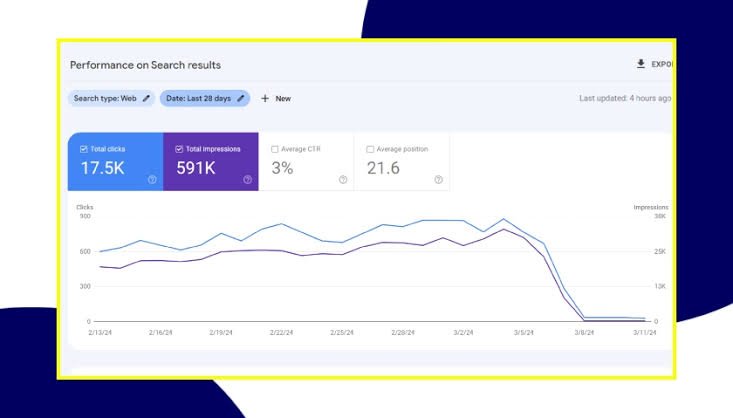
- The Guillotine Drop: Updates specifically designed to target spam—like the historical Penguin (which targeted bad links) and Panda (which targeted thin content) updates, or modern Helpful Content Updates—run automatically. If the algorithm detects your PBN or AI-generated spam, your rankings will simply vanish. A site getting 10,000 visitors a day can drop to 10 visitors a day overnight. There is no warning.
2. Manual Actions
Sometimes, the algorithm flags a site as suspicious, and a human reviewer at Google steps in to investigate.
- The Death Sentence: If the reviewer confirms you are manipulating results (e.g., buying links or cloaking), they will apply a “Manual Action.” You will receive a terrifying message in your Google Search Console informing you that your site has been penalized. Until you fix the issue and successfully beg for forgiveness, your organic traffic is dead.
3. Complete De-indexing
In severe cases, particularly involving malicious cloaking, malware distribution, or massive spam networks, a website will be completely removed from Google’s search index. The site becomes entirely invisible. Even if a user types your exact brand name or URL into the search bar, Google will pretend your website does not exist.
4. Brand Destruction and Loss of Trust
SEO is ultimately about driving humans to a destination. If a user clicks on a search result expecting a professional service and is met with a keyword-stuffed, unreadable mess of a webpage, they will instantly hit the back button. This not only signals to Google that your site is unhelpful, but it severely damages your brand’s credibility. Trust takes years to build and seconds to destroy.
5. The Nightmare of Recovery
The biggest hidden cost of Black Hat SEO is the recovery phase. If a legitimate business gets hit by a penalty because they hired a shady SEO agency, recovering is a nightmare.
- The Cleanup: You must use Google’s Disavow Tool to manually inspect and reject thousands of toxic backlinks. You must delete or rewrite hundreds of low-quality pages.
- The Begging: For manual actions, you must submit a Reconsideration Request to Google, proving you have cleaned up your act. They frequently reject the first few attempts.
- The Waiting: Even after a penalty is technically lifted, the site’s historical authority is reset. You are essentially starting from scratch, and it often takes years of pristine, White Hat effort to regain the traffic you lost.
The Final Verdict: Is It Worth It?
If you are running a burner affiliate site and are willing to engage in a constant, stressful game of cat-and-mouse with multi-billion-dollar tech giants, Black Hat SEO offers short-term financial rewards.
However, if you are building a real business, a personal brand, an e-commerce store, or a local service company, Black Hat SEO is corporate suicide. The reality of modern digital marketing in 2026 is that the algorithms are simply too intelligent to be tricked for long. The initial cheap cost of buying links or spinning content is dwarfed by the massive financial losses incurred when your site inevitably drops to zero.
Black Hat SEO is no longer a viable growth strategy; it is a high-stakes gamble where, eventually, the house always wins.