
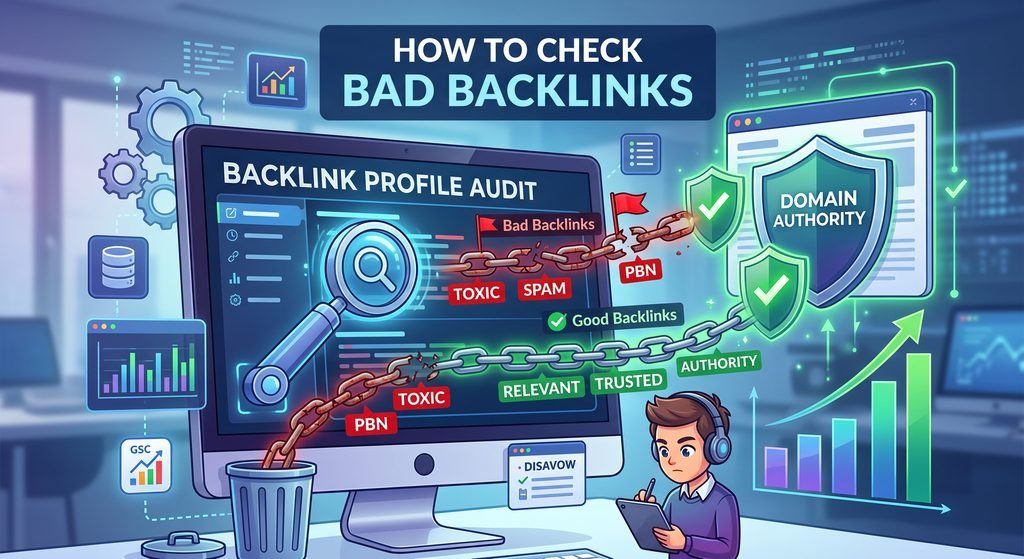
How to Check Bad Backlinks
Link building is a double-edged sword in the world of Search Engine Optimization. While securing high-authority, contextually relevant backlinks is the most reliable way to scale organic visibility, the accumulation of toxic or “bad” backlinks can actively suppress your rankings. Search engines, particularly Google with its advanced SpamBrain AI, have evolved significantly. They are no longer just counting links; they are evaluating the editorial integrity, neighborhood, and relevance of every referring domain.
For digital marketers, especially those managing high-stakes domains in competitive sectors like enterprise IT infrastructure, cloud hosting, or specialized routing networks, maintaining a pristine link profile is not optional—it is a continuous requirement. This guide breaks down how to identify, audit, and successfully neutralize harmful inbound links before they trigger algorithmic penalties.
The Anatomy of a Toxic Backlink
Not all low-metric links are toxic. A link from a newly launched, low-traffic blog in your niche is harmless and natural. A bad backlink, however, is one designed specifically to manipulate search rankings, violating Google’s Webmaster Guidelines. Identifying them requires recognizing specific patterns:
- Irrelevant Neighborhoods: Context is everything. If you are operating a dedicated server or VPS hosting platform, a sudden influx of backlinks from foreign-language casinos, pharmaceutical sites, or generic lifestyle blogs is a glaring anomaly to search crawlers.
- Private Blog Networks (PBNs) and Link Farms: These are interconnected groups of websites created solely to sell links. They typically feature scraped content, hidden ownership details, and out-bound link profiles bloated with exact-match commercial anchors.
- Over-Optimized Anchor Text: Natural link profiles consist mostly of branded (e.g., “RaasDigital”), naked URL, or miscellaneous (e.g., “click here”) anchors. If your backlink profile is heavily skewed toward exact-match commercial terms (e.g., “cheap offshore servers” or “buy bare metal routing”), it triggers an over-optimization red flag.
- Forced Footer and Sitewide Links: Links embedded in the footers or sidebars of hundreds of unrelated websites (often the result of a hacked site or a poorly executed widget distribution) are easily flagged as manipulative spam.
Step-by-Step Backlink Auditing
Routine link auditing should be a core component of your off-page strategy. A reactive approach—waiting until a penalty hits—often results in months of lost revenue and traffic.
1. The Baseline Check: Google Search Console (GSC)
Your first stop should always be GSC. Navigate to the Security & Manual Actions tab. If your site has crossed the threshold into severe manipulation, you will see a manual action here. Even without a manual penalty, you should regularly export your “Top linking sites” data from GSC to look for unfamiliar, spammy domains.
2. Deep-Dive Analysis with Off-Page SEO Tools
GSC provides a fraction of your link data. To conduct a thorough audit, you need enterprise-level tools like Ahrefs, Semrush, or Majestic.
- Run a Referring Domains Report: Sort the list by Domain Rating (DR) or Authority Score, starting from the lowest.
- Analyze Traffic Drops: A low DR isn’t inherently bad, but a site that previously had organic traffic and suddenly dropped to zero has likely been penalized by Google. A link from a penalized site carries significant risk.
- Evaluate Link Velocity: Look for unnatural spikes in your link acquisition graph. If you acquired 500 links in a single week without a major PR event or viral content piece, it is highly likely a negative SEO attack or automated spam targeting your domain.
The Remediation Strategy: Outreach and Removal
Once you have compiled a list of toxic URLs, you must take action to neutralize them. Google’s explicit preference is that webmasters make a genuine effort to clean up the web by having the links physically removed.
Executing Link Removal Outreach
As an outreach specialist, apply the same level of professionalism to removal requests as you would to link acquisition.
- Identify the Webmaster: Use tools like Hunter.io or basic WHOIS lookups to find the site owner’s contact information.
- Draft a Concise Request: Do not make threats. Send a clear, polite email identifying your domain, the exact URL on their site containing the link, and a direct request to either remove the link entirely or append a rel=”nofollow” attribute.
- Document Everything: Keep a spreadsheet tracking the domains you contacted, the dates of outreach, and their responses. If you eventually need to submit a reconsideration request to Google, this documentation proves your manual cleanup efforts.
The Final Resort: The Google Disavow Tool
If manual outreach fails, webmasters demand payment for link removal (which you should never pay), or you are dealing with a massive negative SEO attack consisting of thousands of automated links, you must use the Google Disavow Tool.
The Disavow tool tells Google’s crawlers to completely ignore specific links or entire domains when assessing your site’s authority. Use this tool with extreme caution. Disavowing the wrong links can strip your site of vital authority and tank your organic rankings.
How to Format and Submit a Disavow File:
- Create a plain text file (.txt) encoded in UTF-8.
- To neutralize an isolated spam link on an otherwise normal site, list the specific URL: [http://spam-domain.com/irrelevant-page.html](http://spam-domain.com/irrelevant-page.html)
- To neutralize a dedicated link farm or PBN, disavow the entire domain using this precise format: domain:toxic-network.com
- You can include comments for your own records by starting a line with a # (e.g., # Contacted webmaster on Oct 12, no response).
- Upload the .txt file to the Disavow section of Google Search Console.
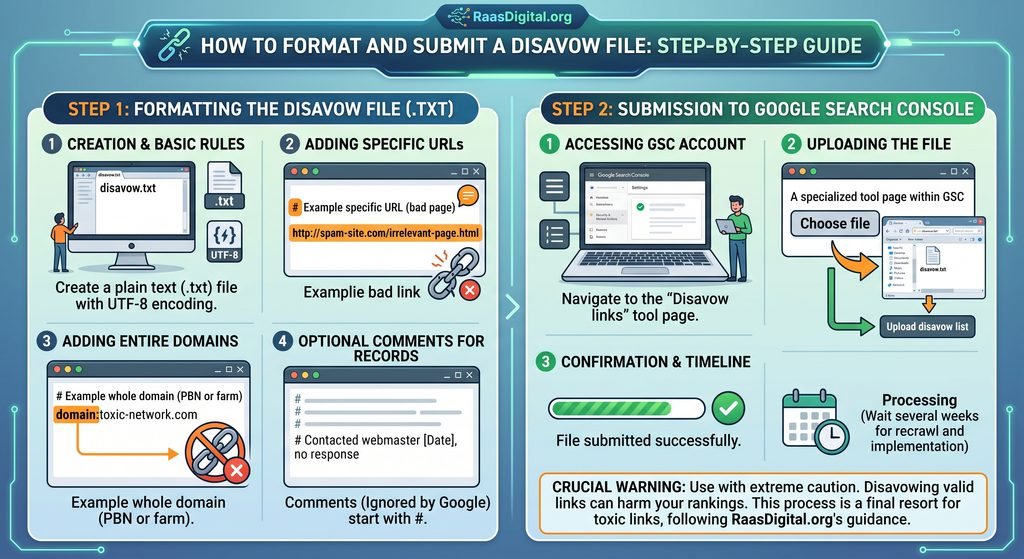
It can take several weeks for Google to recrawl the disavowed URLs and apply the directive. By establishing a routine of monthly link monitoring, rigorous relevance analysis, and proactive cleanup, you protect your digital assets from algorithmic volatility and ensure that your legitimate link-building efforts yield maximum ROI.